Public debates, news reports, and even official documents frequently mix up two important terms: migrants and refugees. This confusion does more than create linguistic inaccuracies—it shapes public opinion, influences policy, and directly affects the safety and dignity of people on the move. Understanding why these terms are often used interchangeably, and why that is a problem, is essential for anyone who wants to talk responsibly about global mobility, human rights, and modern economies.
1. Complex Legal Definitions That Few People Learn
Vietnam war refugees are a powerful reminder of why the distinction between migrants and refugees matters. They fled war and persecution with no possibility of safe return, embodying the legal definition of a refugee. Their story illustrates what is at stake when these terms are confused. Understanding who qualifies as a refugee is not just a matter of terminology, but of protection and human lives.
One of the main reasons migrants and refugees are often confused lies in the technical nature of the legal definitions. A refugee is defined under international law—most notably the 1951 Refugee Convention and its 1967 Protocol—as someone who has crossed a border due to a well-founded fear of persecution for reasons such as race, religion, nationality, political opinion, or membership in a particular social group. A migrant, in contrast, is a broader category that includes anyone who moves to another country, temporarily or permanently, for reasons that can include work, study, family reunification, or better living conditions.
These details are typically known only to lawyers, policymakers, and specialized organizations. The everyday language people use condenses this nuance into simple labels. Because the distinctions are not intuitive without explanation, people default to umbrella terms like “migrant,” which erases crucial legal protections that apply specifically to refugees.
2. Media Headlines Favor Speed Over Accuracy
News outlets and social media thrive on attention-grabbing headlines, often sacrificing precision in the process. The term “migrant crisis” is convenient and fits easily into limited character counts, but it is rarely an accurate description of who is on the move. Many of the people featured in such stories are legally refugees, asylum seekers, or people with temporary protection status.
This consistent simplification gradually shapes public understanding. When audiences see the same term applied to very different situations, they internalize the idea that all cross-border movement is essentially the same. Even when longer articles explain the distinction, the headline usually determines how the story will be remembered and shared.
3. Economic Narratives Overshadow Protection Needs
Another driver of confusion is the dominant focus on economic impacts of global mobility. Governments and commentators often discuss workers, remittances, and labor shortages without emphasizing the difference between someone who chooses to move for a job and someone who flees violence or persecution. In public debate, both are lumped together as “economic migrants,” which is inaccurate and harmful.
This economic framing also affects how migrants and refugees manage their everyday lives, including their financial obligations and small businesses. Many are self-employed or work as freelancers, often needing tools such as an **online invoice generator** to handle cross-border payments, adapt to informal job markets, and maintain clear records for tax or legal purposes. Solutions like this are vital for people navigating uncertain legal statuses and fragmented work opportunities.
4. Political Agendas Blur Language Intentionally
In many countries, political actors deliberately blur the lines between migrants and refugees to support their agenda. When policymakers want to appear tough on migration, they may label all arrivals as migrants, even if some clearly qualify as refugees under international law. By doing so, they tap into public fears about border control and job competition, while sidestepping legal obligations to offer protection.
Conversely, some actors may overuse the term “refugee” to evoke sympathy, even in situations where people are primarily moving for economic reasons. Both strategies manipulate language to influence emotions rather than to illuminate realities, leaving the public with an unclear and distorted picture.
5. Overlapping Realities in People’s Lives
Human lives do not always fit neatly into legal categories. Someone might flee a country where both armed conflict and economic collapse are taking place. Are they escaping violence, or lack of opportunity, or both? Over time, motivations evolve: a person who initially fled persecution may later pursue education or employment opportunities in a safer country.
This overlap makes it genuinely difficult to separate migrants and refugees based solely on motivations. While the law tries to classify people for the purposes of protection and rights, their lived experiences are far more fluid. Everyday observers see the complexity and understandably struggle to apply rigid labels.
6. Lack of Public Education on Migration and Asylum
Most education systems devote little attention to migration and asylum law, leaving people to learn from fragmented media coverage and political rhetoric. Without foundational knowledge, terms like “asylum seeker,” “refugee,” “internally displaced person,” and “migrant worker” all blur into a single category.
In this vacuum, myths and stereotypes flourish. Many believe that refugees are simply migrants who “broke the rules,” or that all migrants are seeking asylum. When basic concepts are missing, even well-intentioned discussions end up perpetuating confusion.
7. Visual Similarities in Journeys and Experiences
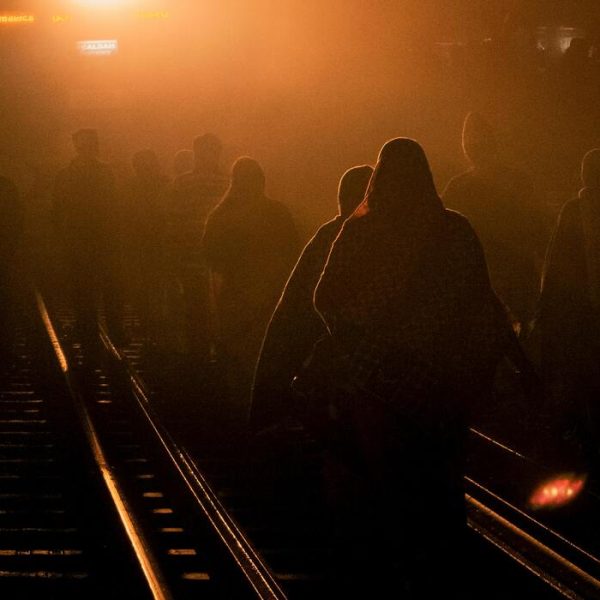
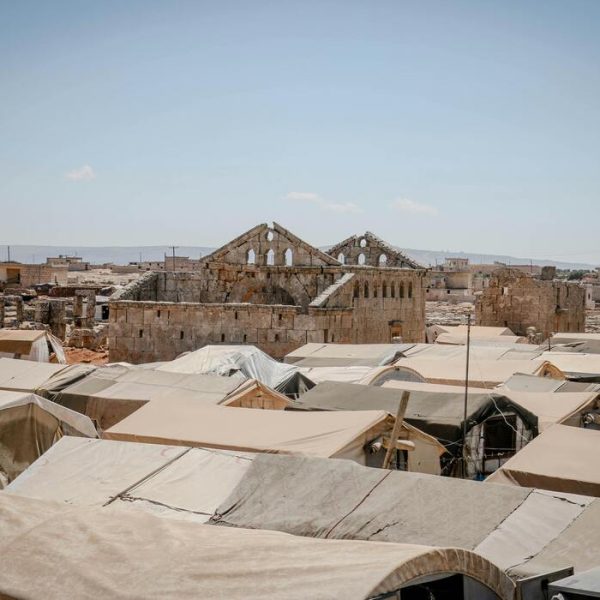
People often form their opinions based on striking visual images: overcrowded boats, border fences, makeshift camps, and long lines of people carrying their belongings. These images do not display legal status; they simply show human movement under duress. Whether the individuals on that boat are legally refugees or migrants is invisible in a photo.
Because so many people on the move face similar dangers—unsafe routes, exploitation, detention, and xenophobia—observers assume their legal situations are the same as well. The shared hardships mask important differences in rights, entitlements, and international protection obligations.
8. Bureaucratic Systems That Use Catch-All Labels
Administrative systems—from visa applications to border forms—often rely on simplified categories for efficiency. Officials might use generic labels or group various statuses under a single code. This bureaucratic shorthand filters into public language, reinforcing the idea that distinctions are trivial or irrelevant.
When even formal documents seem ambiguous, it becomes harder for the public to see why precision matters. The gap between legal reality and administrative practice widens, allowing confusion to spread unnoticed.
Conclusion: Why Getting the Terms Right Matters
The confusion between migrants and refugees is not a minor linguistic issue. It stems from complex laws, media simplifications, political agendas, and the overlapping realities of people’s lives. Yet the consequences are serious: when refugees are misclassified as generic migrants, they risk losing the protections that international law is meant to guarantee. When all migrants are assumed to be refugees, debates about labor, integration, and economic policy become muddled and emotionally charged.
Clear language is a foundation for fair policy and humane treatment. Recognizing the difference between those who move by choice and those who flee out of necessity helps societies respond more effectively and ethically. As global mobility continues to shape economies, communities, and individual livelihoods, investing in accurate information and thoughtful terminology is not just a matter of communication—it is a matter of justice.